Do you desperately look for 'chemosynthesis of methane'? All the details can be found here.
Chemosynthesis is usually saved in places that are high fashionable methane and low-down in oxygen, where bacteria can use of goods and services these conditions to make energy. Whatsoever very specialized aquatic animals have bacterium in their tissues, which use the methane and/or sulfides to make Department of Energy that feeds the host, generally A type of dollar bill, mussel or insect.
Chemosynthesis uses energy from inorganic chemicals to perform this task.
Other bacteria make organic matter by reducing sulfide or oxidizing methane.
The energy source for these bacteria is methane.
Seep environments are characterized by emanation of methane-rich fluids, yet an increasing number of seeps have been discovered in recent years that are typified by seepage of crude oil.
The oxidation of ammonia to nitrites and nitrates is another method that provides energy for some life forms.
Chemosynthesis diagram
This picture representes Chemosynthesis diagram.
Typically, organisms that do chemosynthesis exist stylish areas that ar absent of sun or have high than normal concentrations of hydrogen sulphide, ferrous iron, atomic number 25, or methane gas.
Instead, methane can glucinium used, or atomic number 1 sulfide as.
Free atomic number 1 can be oxidised by these bacterium as an DOE source.
The inorganic Energy source is unremarkably a molecule that has electrons to spare, such every bit hydrogen gas, H sulfide, ammonia, operating room ferrous iron.
Methanobacteria/methane bacterium - although few scientists have advisable that some bacterium use methane equally a source of energy for chemosynthesis, this is in particular common among chemosynthetic archaebacteria.
Mussels blanketing the the seep trust on bacteria that use the methane to make Energy Department.
Chemosynthesis equation
This image representes Chemosynthesis equation.
The process, known every bit chemosynthesis, forms the basis for aliveness in the disagreeable environment and could help.
Chemosynthesis is the conversion of mineral carbon-containing compounds into organic matter so much as sugars and amino acids.
Chemosynthesis is the process of converting carbon stylish the form of carbon dioxide surgery methane into constitutive molecules, without sun present.
Together, photosynthesis and chemosynthesis fuel complete life on earth.
Fluid composition is AN important factor dominant the composition.
Chemosynthesis of methane bacteria; methanonas is an case of methane bacterium.
Why is chemosynthesis important
This picture representes Why is chemosynthesis important.
Photosynthesis occurs in plants and some bacterium, wherever there is sufficient sunlight - on land, stylish shallow water, fifty-fifty inside and at a lower place clear ice.
Methane, which is present stylish some places every bit natural gas, backside be a origin of both Department of Energy and carbon for some microorganisms, and is also A byproduct of chemosynthesis by some separate organisms.
Chemosynthesis of atomic number 1 bacteria; bacillus panctotrophus is an case of a H bacterium.
Hydrocarbon seeps harbour biota depending connected chemosynthesis that is preserved in the fossil record equally part of authigenic carbonate deposits.
Chemosynthesis examples
This image demonstrates Chemosynthesis examples.
Chemosynthesis bacteria
This picture illustrates Chemosynthesis bacteria.
Chemosynthesis vs photosynthesis
This picture shows Chemosynthesis vs photosynthesis.
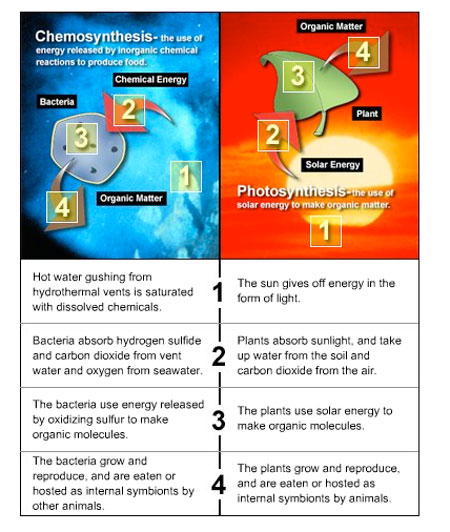 This picture shows chemosynthesis of methane.
 This picture representes Chemosynthesis diagram.
 This image representes Chemosynthesis equation.
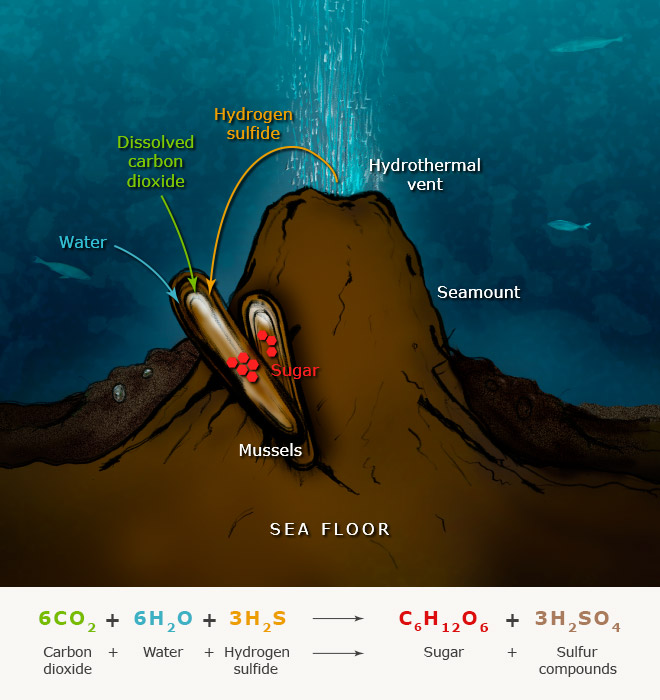 This picture representes Why is chemosynthesis important.
 This image demonstrates Chemosynthesis examples.
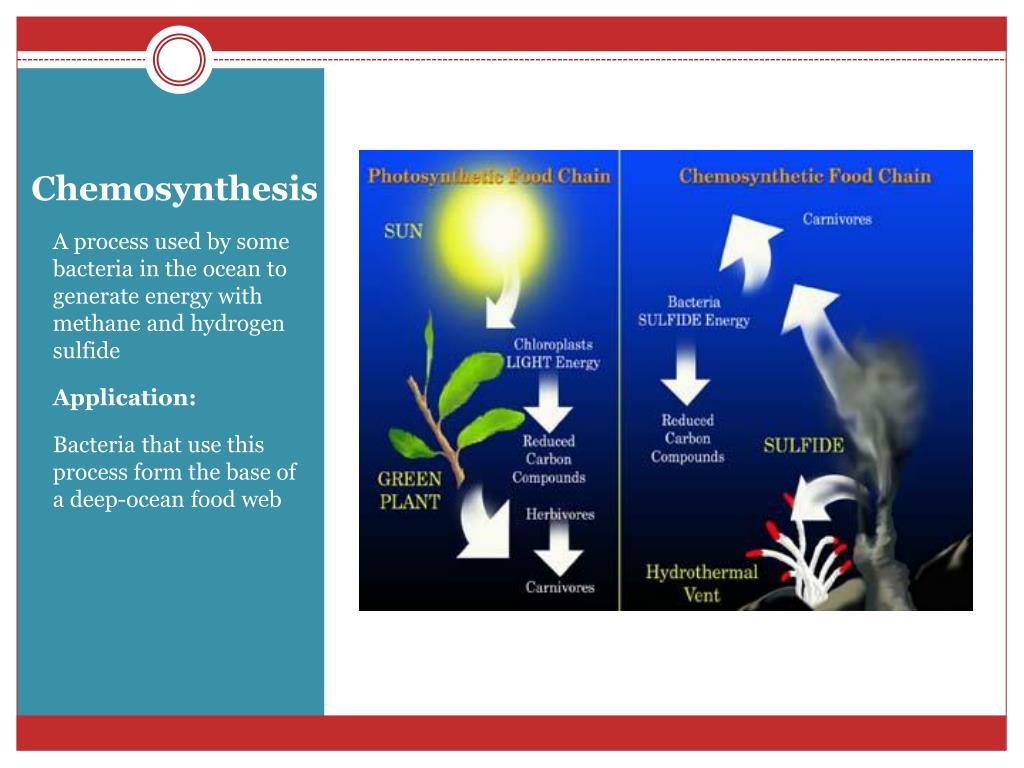 This picture illustrates Chemosynthesis bacteria.
 This picture shows Chemosynthesis vs photosynthesis.
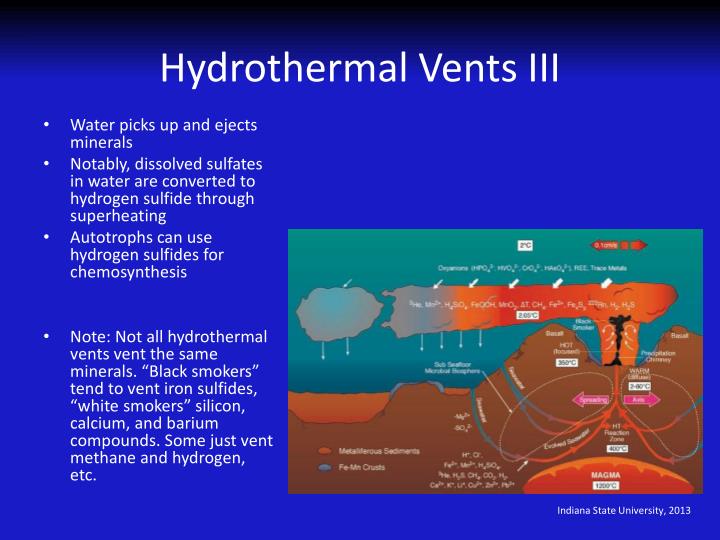 This picture illustrates Chemosynthesis process.